
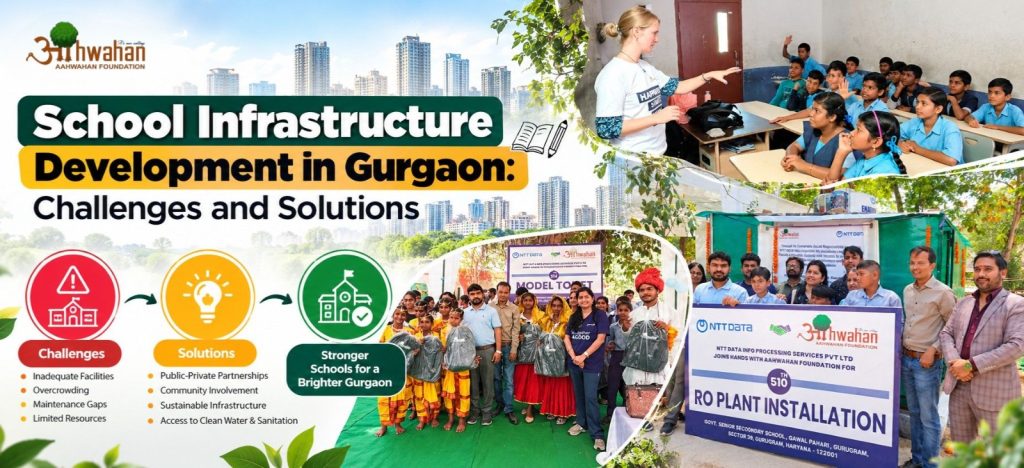
School Infrastructure forms a very essential component in shaping a safe, comfortable and productive learning environment for students. Classrooms, toilets, drinking water, laboratories, libraries, playgrounds, electrical facilities, and digital infrastructure all form parts of a student’s school experience.
Why School Infrastructure is Important
Students attend school every day for quite some hours during the course of each day. The quality of their surroundings can have a direct effect on comfort, participation, and ability to concentrate on studies.
Effective school infrastructure will enable:
- Safe and functional classrooms
- Drinking water
- Sanitation
- Improved lighting and ventilation
- Science laboratories
- Computer laboratories
- Libraries
- Sports facilities
- Digital learning aids
- Spaces for children with disabilities
The importance of infrastructure has been acknowledged by the government in programs such as the Samagra Shiksha Scheme, which funds activities like construction of schools, additional classrooms, and improvement of school infrastructure.
Major Challenges in the Development of School Infrastructure
Ageing and Deteriorated Buildings
This is one of the main challenges in maintaining school building infrastructure. Cracks in walls, damages in the roofs, poor floorings among others can affect safety.
In June 2026, Haryana ordered the construction of new buildings in place of all dilapidated government school buildings across the region.
Limited Classroom Space
Rising numbers of students put strain on the present classrooms. Extra rooms would be required to avoid overcrowding.
Some ways of addressing the problem are:
- Building more classrooms
- Effective utilization of space
- Upgrading unused rooms into usable classrooms
- Creation of multipurpose learning areas
Lack of Sanitation Facilities
Sanitation facilities are crucial for students’ well-being and sanitation. During inspections conducted in Haryana, a lack of toilets, taps, and other such facilities has been noted.
What is needed is maintenance, not construction.
Drinking Water and Hygiene
Availability of drinking water is yet another important aspect that should be taken care of. There needs to be a functional water facility, water storage area, water treatment and maintenance system.
There should also be hygiene facilities like:
- Hand washing facilities
- Taps
- Toilets
- Drainage system
- Waste management system
Limited Access to Modern Learning Facilities
The modern era of education increasingly relies on technology and practical learning. But the school should have suitable infrastructural facilities before implementing technology-based and STEM programs successfully.
Facilities may include:
- Computer labs
- Smart classrooms
- ICT labs
- Science labs
- STEM labs
- Power supply
- Internet connectivity
Recent Haryana audits of PM SHRI schools included computer labs, science labs, smart classrooms, ICT labs, STEM labs, and Atal Tinkering Labs among the facilities.
Practical Solutions for Better School Infrastructure
Perform Regular Infrastructure Audit
The schools should regularly conduct audits of their facilities rather than getting into trouble.
Facility audit may analyze:
- Classroom
- Toilets
- Drinking water
- Electricity
- Boundary walls
- Furniture
- Laboratories
- Library
- Playgrounds
- Digital facilities
- Accessibility
The recent Haryana PM SHRI audit is an example of how facility-level audit can be performed.
Make Safety Your Priority First
The development of infrastructure should start from those facilities which directly impact students’ safety.
These would be the priority areas:
- Buildings structurally safe
- Boundary walls secure
- Safe electricity system
- Toilets functional
- Clean drinking water
- Playgrounds safe
- Fire and emergency plans
Complement Government Infrastructure Funding With CSR Activities
While the government can offer funding for the development of necessary infrastructure, Corporate Social Responsibility can add additional funds for particular projects.
A company can sponsor:
- Classrooms renovation
- Science laboratories
- Computer classes
- School libraries
- Sporting facilities
- Drinking water systems
- Sanitation projects
Cooperate With Skilled NGOs
An NGO can assist the company as well as the community with locating such schools in need and organizing infrastructure projects.
They can conduct needs analysis, implement projects, engage the community, and monitor the work. This will give more organization to CSR-funded infrastructure projects.
How NGOs and CSR Can Contribute To Sustainable Change
When it comes to infrastructure development, it is much better to build something that will last for long.
An effective project should consider:
- Identifying the school’s actual needs.
- Planning the required infrastructure.
- Implementing the project with proper supervision.
- Training staff where required.
- Maintaining the facilities.
- Monitoring usage and outcomes.
This will make sure that any new infrastructure created will continue to benefit the students for many years to come.
Construction of Good Government Schools in Gurgaon
Government schools play a very crucial part in ensuring the availability of education to the children in Gurgaon. The district administration runs a number of government schools in various areas of Gurgaon
.
It is important not to focus merely on creating good-looking schools through infrastructure development. Infrastructure development should lead to the creation of effective learning spaces for children.
Conclusion
In Gurgaon, it is important to follow a balanced strategy for developing school infrastructure. New construction is one of the requirements, but maintenance, sanitation, technological equipment, accessibility, laboratory and library facilities, and other factors are equally important.
Through good planning, continuous monitoring, CSR collaboration, and NGOs’ participation, the government schools in Gurgaon can improve their infrastructure and provide a better learning environment for their students.
In essence, the development of school infrastructure is not just building structures but an investment in children’s education, confidence, opportunities, and future.
