
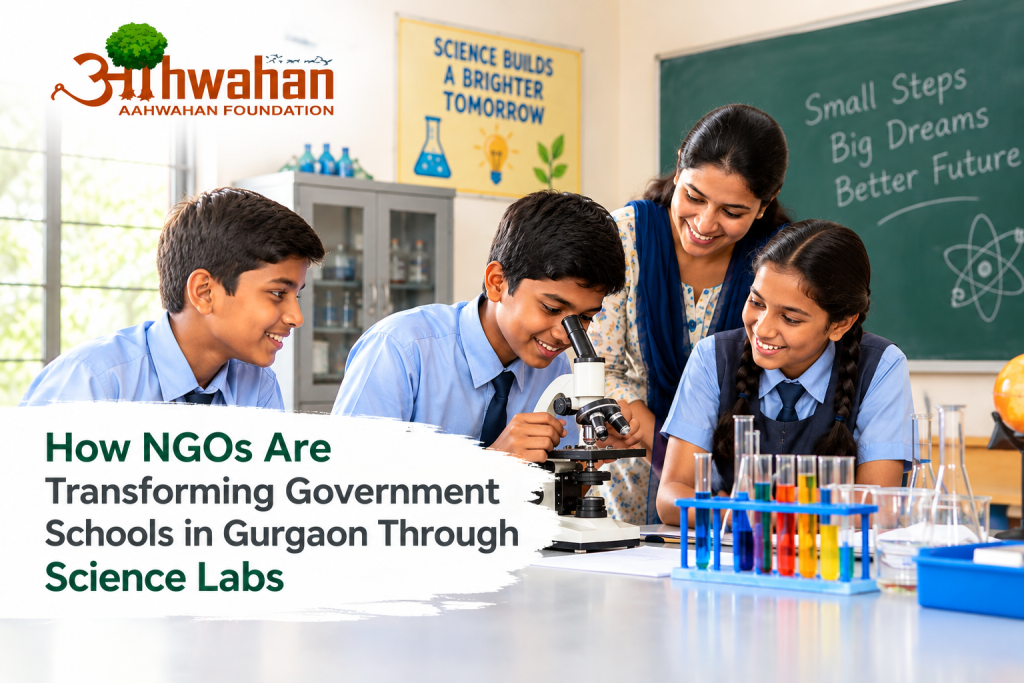
Learning of science is enhanced when learners have the ability to conduct experiments and observe phenomena. Several government schools in Gurgaon have been receiving aid from non-government organizations in the development of their science laboratories.
The Importance of Science Labs in Government Schools
Science is a practical subject that becomes more comprehensible when students are able to conduct practical experiments.
Some benefits that can be derived from the availability of an equipped science lab include:
- Learning of scientific concepts through experiments
- Development of curiosity and observation skills
- Learners learn how to use laboratory equipment
- Enhancement of problem solving abilities
- Connection of textbook concepts and life
- Developing interest in science and technology
- Building of confidence through practical learning
Availability of laboratories in government schools with minimal resources can play a huge role.
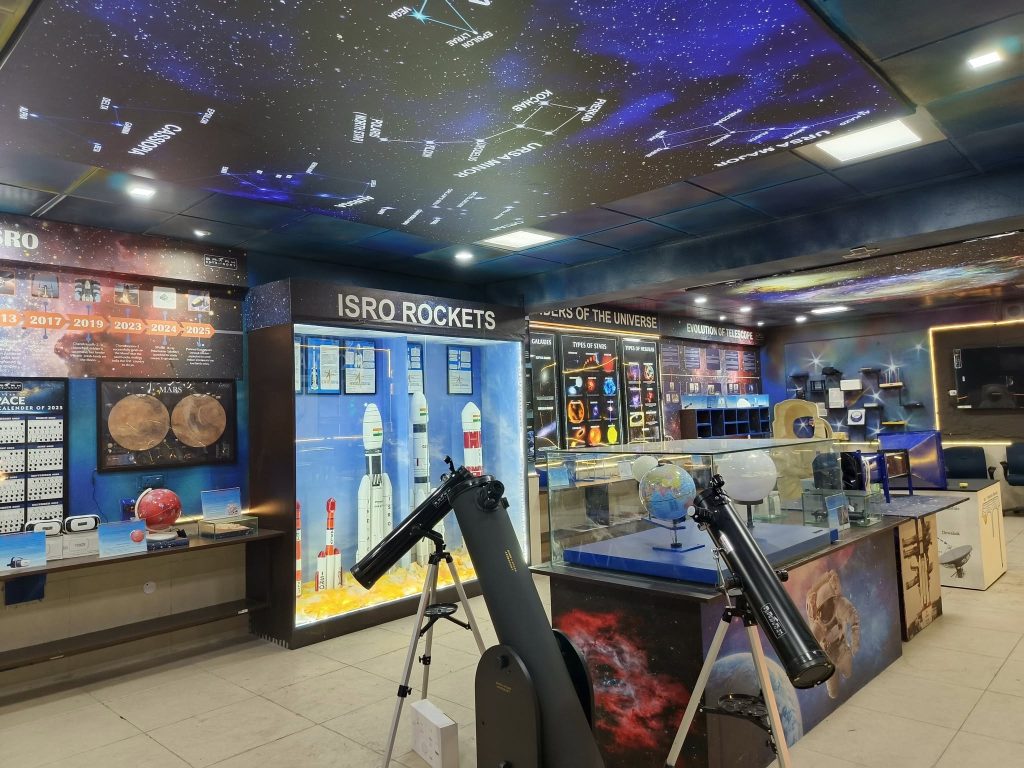
How Non-Government Organizations Are Revolutionizing Science Education
Non-government organizations usually work hand-in-hand with schools, teachers, communities, and corporate CSR programs. The involvement of these organizations goes beyond the provision of laboratory equipment.
1. Development of Modern Science Laboratory
There is no better way of supporting government schools than setting up dedicated science laboratories.
This would involve acquisition of:
- Laboratory tables and cabinets
- Microscopes
- Measuring equipment
- Basic chemistry lab equipment
An organized lab creates an appropriate environment for conducting hands-on learning for the learners.
2. Provision of Science Kits for Experiments
All schools do not have the means of conducting regular experiments. Such situations can be resolved through the provision of science kits, which have all the necessary apparatus.
The kits can be used by the learners to carry out experiments on:
- Electricity
- Magnetism
- Light
- Sound
- Chemical processes
- Plants
- Human body
- Measurements
Through these hands-on activities, the learners get more engaged in classroom teachings.
3. Enhancing Interactivity in the Learning of Science
Most traditional methods of teaching involve much reliance on textbooks and classroom teaching methods. The laboratory brings about interactivity in the learning process.
Rather than just read about the process of an experiment, learners will be able to see the process in action.
For instance, a lesson on electrical circuits will be made practical through the learners connecting wires, battery, switches, and light bulbs together. Biology lessons will be interesting in case learners get to observe specimens.
4. Training Teachers in Use of Laboratory Resources
A laboratory becomes more useful when teachers are skilled in handling laboratory equipment.
The NGOs can organize training sessions for teachers on:
- Laboratory safety
- Methods for experiments
- Handling of equipment
- Activity-oriented teaching
- Classroom demonstrations
- Science project development
Furthermore, teacher training ensures that laboratories remain valuable resources for many years to come, rather than remaining as unused facilities.
5. Facilitating Learning via Experiment
Experiment-based learning allows children to formulate their own questions and come up with the solutions themselves.
Rather than memorizing science concepts, students learn through a relatively simple procedure:
- Formulating a question
- Understanding the scientific concept
- Performing an experiment
- Observing the outcome
- Discussing the results
- Concluding on the experiment
This method can enhance students’ critical thinking and scientific reasoning.
The Importance of Science Laboratories in the Long Run
The success of a science laboratory is not judged by merely the number of instruments installed in it. The true value of laboratories can be gauged by the frequency of its usage and practical learning experience.
Importance of science laboratories in the long run:
- Improved practical knowledge
- Student engagement
- Scientific reasoning
- Improving confidence
- Interest in STEM subjects
- Science project opportunities
- Exposure to the laboratories
- Awareness about scientific career paths
The Role of NGOs in Building Better Science Education
NGOs can be a crucial connection point between resources and schools that require them. The activities of NGOs may include infrastructure construction, teachers’ training, engagement of the students, monitoring, and participation of the community.
One of the organizations operating within the domain of social development is the Aahwahan Foundation- Best NGO in Gurgaon, which initiates projects aimed at providing greater chances to disadvantaged people.
Building the Future Through Practical Science
The science labs can change the lives of government schools if they are turned into places of active learning rather than places where only the laboratory equipment is stored.
The aim is not only the improvement of science grades. It is the development of students’ curiosity, creativity, problem-solving ability, and confidence.
Moreover, Aahwahan Foundation represents the bigger picture of the role of social organizations within communities.
